

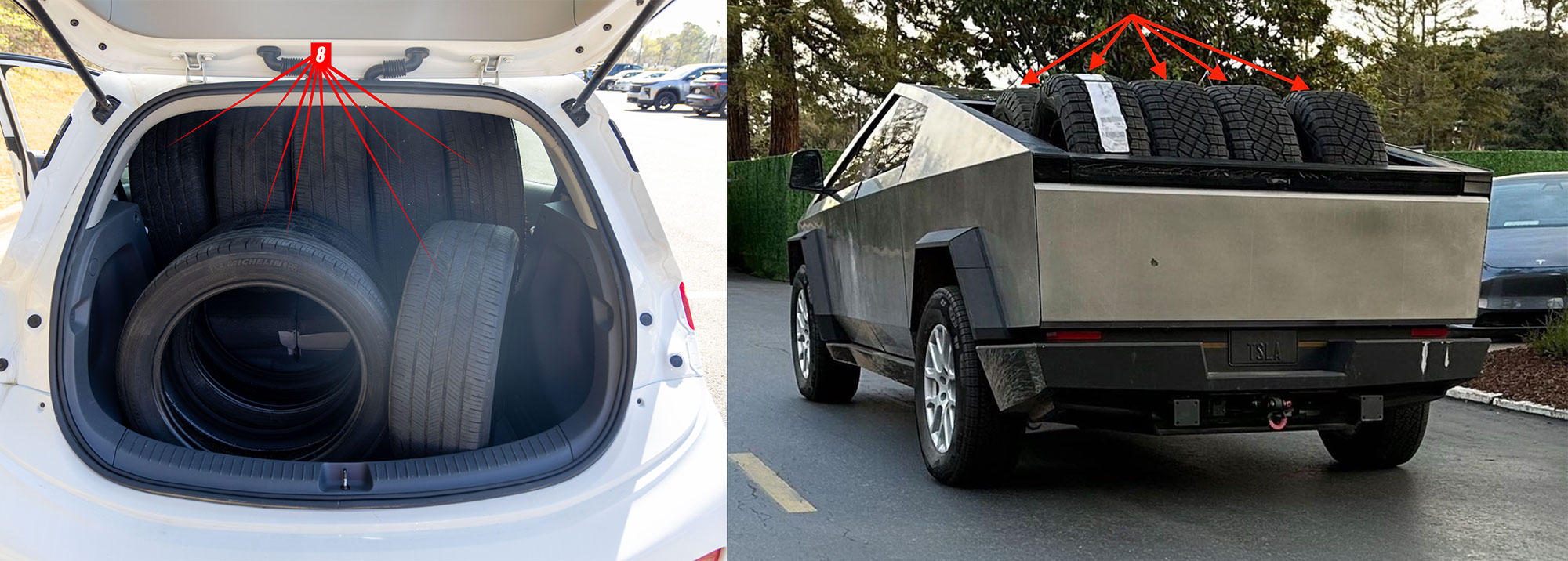
When people think of “truckability”—towing power, hauling gear, handling rough roads—they tend to picture something massive, aggressive, and, let’s be honest, pricey. Enter the Tesla Cybertruck, a $100,000 electric beast designed to turn heads and handle almost anything you throw at it. But what if we told you there’s another electric vehicle that can tick a surprising number of those same boxes—at just a fraction of the price?
Let’s talk about the Chevrolet Bolt EV, starting as low as $10,000 on the used market. While it may not look like a tank from a sci-fi movie, it might just be the budget-friendly, stealthy utility champ nobody saw coming.
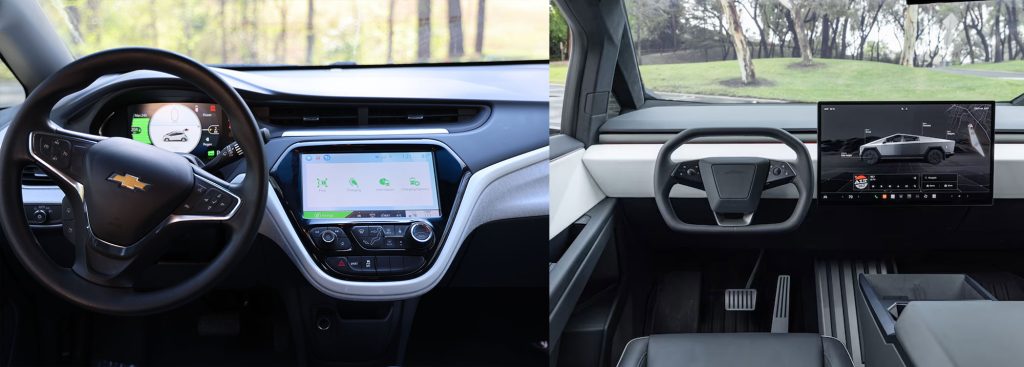
Size Doesn’t Always Equal Utility
Sure, the Cybertruck boasts a 6.5-foot bed, armored glass, and angular styling that screams post-apocalyptic luxury. It’s built for towing up to 11,000 lbs (although the BOLT’s bumper is less likely to fall off if you hit a pot hole) and promises up to 340 miles of range. Impressive specs—but also overkill for the daily driver who just needs to move furniture, haul garden soil, or load up for a weekend away.
The Bolt EV, on the other hand, offers:
- A surprisingly roomy hatchback design, with up to 56.6 cubic feet of cargo space when the seats are folded.
- Front-wheel drive and a low center of gravity for excellent traction and control—even in bad weather.
- An EPA-estimated range of 259 miles, more than enough for most road trips, errands, and commutes.
While the Cybertruck may be hauling trailers, the Bolt is efficiently hauling bikes, plants, coolers, strollers, IKEA furniture, and weekend adventure gear.
Power Where You Need It
The Cybertruck delivers over 800 horsepower in the top trim and can launch from 0-60 in 3 seconds. The Bolt doesn’t try to compete on raw power—but let’s be real: when’s the last time you needed to outrun a supercar to pick up groceries?
What the Bolt EV does offer is:
- Instant electric torque for quick acceleration.
- Nimble handling in city streets and tight parking lots.
- Low running costs and high reliability.
It may not win a drag race, but the Bolt can still merge onto highways with confidence and zip through traffic with ease.
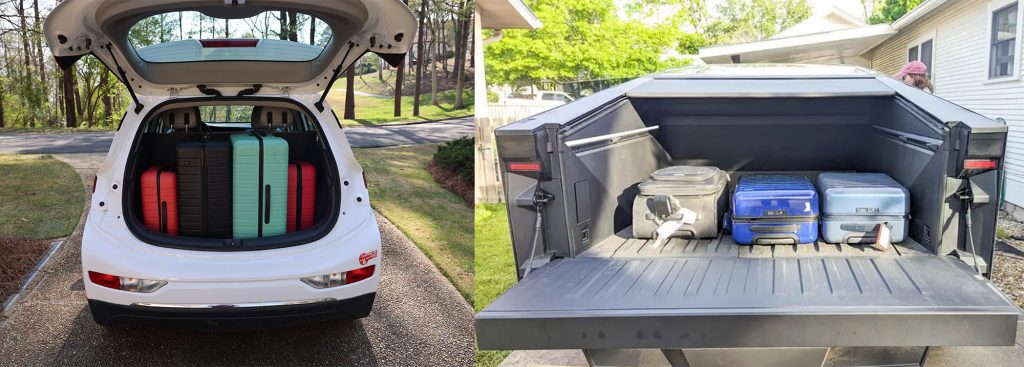
Real-World Use: What You Actually Do With a Vehicle
Let’s compare tasks:
| Task | Cybertruck | Bolt EV |
|---|---|---|
| Grocery hauls | ✅ | ✅ |
| Road trips | ✅ | ✅ |
| Hauling gear for work/hobby | ✅ | ✅ (with rear seats down) |
| Camping | ✅ (with $3,000 tent) | ✅ (BYOT) |
| Towing | ✅ | ❌ |
| Parking in tight spaces | ❌ | ✅ |
| Charging at standard EV stations | ✅ | ✅ |
| Cost of entry | ~$100,000 | ~$10,000 (used market) |
The takeaway? For the average driver who isn’t towing a boat every weekend, the Bolt EV can do **almost everything the Cybertruck can—**while saving you tens of thousands of dollars.
The Bolt EV: Underrated and Overdelivering
The Bolt isn’t trying to be flashy. It’s a practical, electric workhorse that’s been quietly proving itself since its debut. With flat-folding seats, excellent range, and ultra-low operating costs, it’s the smart choice for those who want truck-like utility without the truck-like size—or price tag.
So, while the Cybertruck might steal the spotlight, the Chevrolet Bolt EV is winning the long game. It’s efficient, adaptable, and incredibly cost-effective. Sometimes, the best truck is the one that doesn’t look like a truck at all.
Looking for electric power without the price tag? Don’t sleep on the Bolt.
Connect with us


Recent Blog Entries
- Cybertruck vs. Chevrolet Bolt EV: Who Says You Need a Truck to Get the Job Done?
- Used BOLT EVs – Over 30 All Priced Under $20,000 – Most Qualify for $4,000 EV Tax Credit
- Stable Gas Prices: A Surprising Trend for the Season
- Cars Built for the Long Haul: A Glimpse into Vehicles that Stand the Test of Time
- Auto Industry Trends We Just Can’t Get Behind